All lesson formats explained
Live video calls, flexible video exchange, music theory, children, adults — every format explained in full.
Format 01
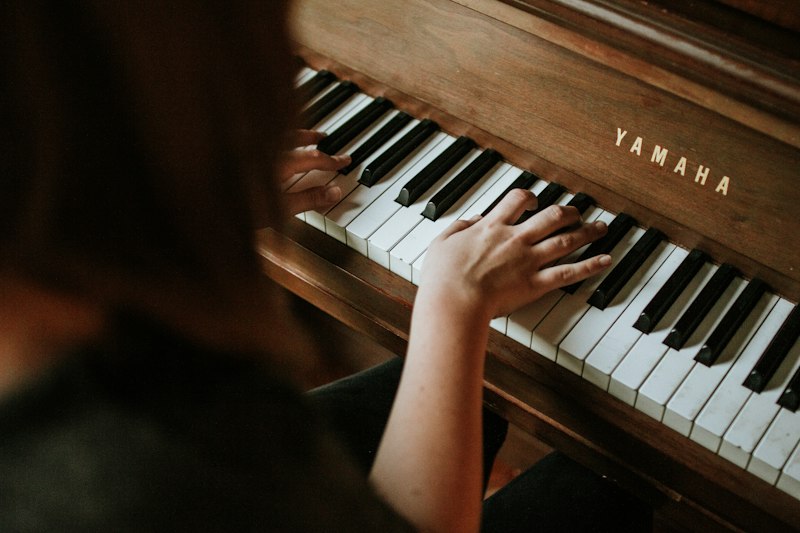
One-to-one piano lessons in real time, delivered via Zoom, FaceTime, Microsoft Teams, or Google Meet. You play from your own piano at home; Ruth teaches from her studio with her full range of resources, camera angles, and demonstrations.
This is the closest online experience to a traditional in-person lesson — with the added benefit of no travel, no commuting time, and lessons from the comfort of your own home with your own familiar instrument.
Format 02 · Ruth's signature format
Ruth's unique correspondence lesson format. You film yourself playing your piano and send the videos to Ruth. Ruth watches carefully, then sends back a detailed written response and, where helpful, a demonstration video — along with your personalised next assignment.
No fixed lesson time. No shared timezone. No scheduling constraints. Just expert, one-to-one teaching on your schedule — reaching students in the UK, USA, Australia, and across Europe.
How it works — step by step
Record 1–2 short videos on your phone, tablet, or camera. Show your hands on the keys. No special equipment needed.
Share via Google Drive, Dropbox, YouTube (unlisted), or Vimeo. Quick and straightforward.
Technique, musicality, rhythm, expression, and fingering — Ruth gives the same depth of attention as a live session.
A personalised written and/or video response with your next assignment — feedback you can review as many times as you need.
PRICING
£17.25 per exchange lesson
Pay as you go · No subscription · Weekly, fortnightly or monthly
Specialist area
Ruth teaches children from age 4 upwards, and has extensive experience making the piano engaging and enjoyable for very young learners. Multiple students who began as young children have gone on to achieve ABRSM distinctions under Ruth's teaching.
For children, live video call lessons (Zoom or FaceTime) work best — the real-time interaction, immediate encouragement, and visible teacher presence make all the difference for young learners building their first musical habits.
"The calmest, kindest and most patient teacher I have ever known. My daughter is now at Grade 4, and my son Grade 2." — Pip, Parent
For adult learners
Ruth teaches adult learners at every level — complete beginners who have never touched a piano, returning students who played years ago and want to pick it up again, and advanced players working towards diplomas.
Ruth creates a relaxed, pressure-free environment particularly suited to adult learners who may feel self-conscious about their playing. No judgment, no pressure — just thoughtful, personalised teaching that meets you exactly where you are.
"I really like your style of teaching. You are always so encouraging, as well as giving great ideas and techniques." — Lucy, Adult Student
Standalone or integrated
Ruth offers music theory tuition as a standalone service via correspondence (email/post) as well as integrated into piano lessons. Covering all levels from absolute beginner through to advanced diploma-level theory.
Students submit their completed theory work as photos or scans, and Ruth marks it, adds detailed comments, and answers questions — typically within a few working days.
"Ruth helped me achieve a high distinction in my Grade 8 theory. Her explanation of harmony concepts was exceptional."
— Alan, Grade 8 Theory Student
"I learned Grades 7 and 8 theory in 3 months and achieved a merit. The feedback was always clear and understandable."
— Scarlett, Grades 7 & 8 Theory
Getting started
Position your device diagonally to the side of the piano, angled slightly downward — high enough to show your hands on the keyboard and your upper body. Landscape mode is strongly preferred. A gooseneck phone holder or tripod makes this much easier.
In Zoom settings, set "suppress background noise" to Low — or enable "Original Sound for Musicians." This prevents Zoom from treating piano sound as background noise. On phones and tablets, look for "Original Audio" in settings.
Position your device close to your Wi-Fi router. Minimise other household internet usage during lessons. Close unnecessary apps. If possible, use a wired ethernet connection for the most stable experience.
A smartphone, tablet, or laptop with a working camera and microphone. That's it — no special equipment is required. Ruth will provide sheet music as free public domain downloads where available, or recommend affordable printed books.
First enquiry is free. Ruth replies personally. No obligation.